
To prepare for SSC CGL as a beginner, first understand the exam stages and syllabus, then build basics in Maths, Reasoning, English and General Awareness, practise daily, and take regular mock tests. You do not need to start with very hard books. A simple daily routine, strong basics and weekly revision are enough to build a solid foundation. This guide gives a practical plan you can follow for 6 to 12 months.
What Is SSC CGL?
SSC CGL (Combined Graduate Level) is a national exam conducted by the Staff Selection Commission for many Group B and Group C posts in central government departments. Graduates from any stream can apply, subject to the eligibility of each post. The exam pattern, number of stages, vacancies and dates are announced by SSC in the official notification and may change, so always read the latest one. See our government exams guide for other exams.
Exam Stages in Simple Words
| Stage | Type | What it tests |
|---|---|---|
| Tier 1 | Computer-based objective test | Reasoning, General Awareness, Quantitative Aptitude, English |
| Tier 2 | Computer-based objective test | Deeper papers in Maths, English and other subjects as notified |
| Skill / typing / document verification | Depends on the post | Typing, computer proficiency or documents for selected posts |
The exact stages and subjects can change, so check the latest SSC notification before you plan.
Subjects and Basic Topics
| Subject | Main topics for beginners |
|---|---|
| Quantitative Aptitude | Percentages, ratio, average, profit and loss, simple and compound interest, time and work, speed and distance, algebra, geometry, mensuration |
| Reasoning | Series, analogies, coding-decoding, blood relations, directions, syllogism, puzzles |
| English | Grammar, vocabulary, error spotting, fill in the blanks, comprehension, idioms |
| General Awareness | History, polity, geography, economy, science, current affairs |
Step-by-Step Strategy
Step 1: Know the Syllabus and Previous Papers
Download the syllabus and solve one or two previous year papers just to understand difficulty. Note the topics that repeat.
Step 2: Build Basics (First 2 to 3 Months)
Start with school-level maths from Class 6 to 10, basic grammar and simple reasoning. Learn formulas, tables and squares up to 30. Read the newspaper daily for general awareness.
Step 3: Practise Topic-wise (Next 3 Months)
After finishing a topic, solve 30 to 50 questions. Keep a notebook for formulas and mistakes. Time yourself so that speed improves.
Step 4: Mock Tests and Revision (Last 2 to 3 Months)
Take full-length mock tests two or three times a week. Analyse each one and revise weak topics. Do short revision of GK and current affairs every day.
Daily Timetable Example
| Time | Activity |
|---|---|
| Morning (2 hrs) | Quantitative Aptitude: concept plus 30 questions |
| Late morning (1 hr) | Reasoning practice |
| Afternoon (1.5 hrs) | English: grammar, vocabulary and passages |
| Evening (1.5 hrs) | General Awareness and current affairs |
| Night (1 hr) | Revision and mistake notebook |
If you are working or studying, reduce the hours but keep the same order. Even 3 to 4 focused hours daily can work with consistency.
Subject-wise Tips
Quantitative Aptitude
Start with arithmetic, since it forms the base of most questions. Learn tables up to 20, squares up to 30 and cubes up to 15. Practise percentages and fractions first, then move to ratio, average and profit and loss. After arithmetic, cover algebra, geometry and mensuration. Always revise formulas weekly and solve at least 30 questions per day.
Reasoning
Reasoning is scoring when practised. Learn the patterns of series, coding-decoding and analogies. Practise puzzles and seating arrangement slowly at first, then with a timer. Review the logic of every wrong answer, because reasoning improves when you understand why you made a mistake.
English
Begin with basic grammar rules: tenses, articles, prepositions and subject-verb agreement. Learn 10 new words daily with sentences. Read an editorial every day for comprehension. Practise error spotting and fill in the blanks. Keep a notebook of common mistakes.
General Awareness
Divide GK into static and current affairs. For static GK, read standard NCERT summaries of History, Geography, Polity and Economy. For current affairs, read the news daily and revise monthly. Our general awareness and full forms list pages can help with quick revision.
Weekly Plan
| Day | Plan |
|---|---|
| Monday to Friday | Follow the daily timetable and finish topic-wise practice |
| Saturday | Sectional tests and revision of weak topics |
| Sunday | Full-length mock, detailed analysis and rest |
How to Analyse a Mock Test
- Check score, accuracy and time per section.
- Mark questions you got wrong due to concept gaps, silly errors or lack of time.
- Learn the correct method for each wrong question.
- Write key formulas or rules in your notebook.
- Re-attempt the same test after one week to check improvement.
Mistakes to Avoid
- Reading too many books and not revising.
- Ignoring English because you are strong in maths.
- Skipping mock tests until the last month.
- Studying without a timetable.
- Depending on unofficial telegram or social media groups for news.
Eligibility, Age and Documents
Eligibility, age limits and relaxations are given in the official SSC notification and differ by post. Keep your graduation certificate, Class 10 and 12 marksheets, category certificate (if applicable), photograph and signature ready. Use the same name and date of birth as in your certificates when filling the form.
Time Management in the Exam
- Attempt the section you are strongest in first.
- Spend about 30 to 40 seconds on a reasoning or GK question, and more on tougher maths questions only when needed.
- Skip a question if you are stuck for more than a minute, and mark it for review.
- Avoid blind guessing because of negative marking.
- Keep the last 5 minutes for review.
Practise this strategy in mocks so that it becomes natural on the real exam day.
Sample 6-Month Roadmap
| Month | Goal |
|---|---|
| 1 | Basics of Maths, grammar and reasoning; start reading newspapers |
| 2 | Complete arithmetic and basic English; start static GK |
| 3 | Algebra, geometry, advanced reasoning; first sectional tests |
| 4 | Complete syllabus; start full mocks once a week |
| 5 | Two or three mocks per week; deep analysis |
| 6 | Revision, weak topics and previous year papers |
If you have 12 months, spend more time on basics and slower revision. If you have 3 to 4 months, focus on high-weightage topics and mocks, but do not skip basics.
Typing and Computer Skills
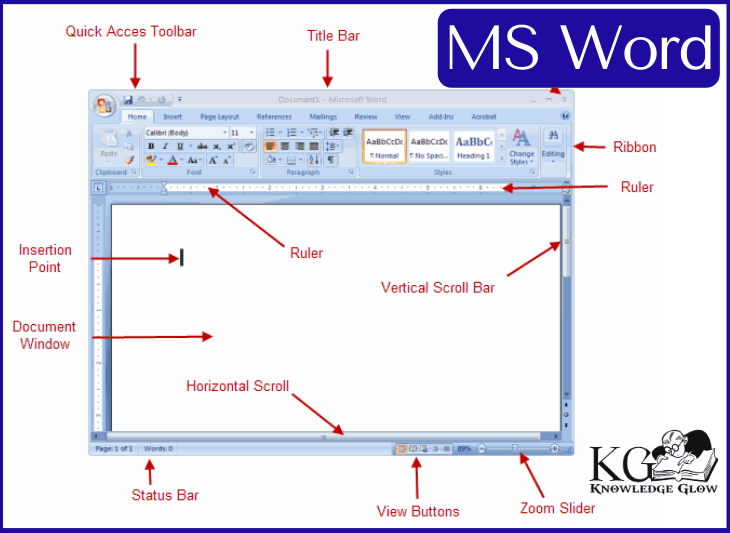
Some posts need a typing or computer skill test. Practise typing on a computer for 15 to 20 minutes daily and learn basic office software like word processing and spreadsheets. Check the notification to see whether your target posts need these tests.
Health, Sleep and Motivation
Long preparation can tire you. Sleep for 7 to 8 hours, eat healthy food and exercise lightly. Take a weekly break and spend time with family or friends. Set small goals and celebrate progress. If you feel stressed or demotivated, talk to a mentor or friend and revisit your plan rather than giving up.
Backup Plans and Next Steps
Because vacancies are limited and competition is high, keep a backup. Apply for other exams with similar syllabus such as banking, railway or state exams, and build skills like computer knowledge and communication. Explore careers and courses for more options. Use scholarships if you need help with coaching or study costs.
Previous Year Papers: How to Use Them
Previous year papers show the style, difficulty and repeated topics. Solve them after finishing a topic, then complete papers in the last months. Compare your performance with the official answer keys, and note which question types you find difficult. Treat each paper as a lesson, not just a score. If a topic appears again and again, give it extra revision time.
Choosing Study Material Wisely
- Pick one standard book for each of Maths, English, Reasoning and GK.
- Use NCERT summaries for static GK if you are a beginner.
- Use free online lectures for difficult topics, but practise on your own.
- Avoid changing books every month; revise the same material at least three times.
- Check official SSC notices instead of relying on social media updates.
Common Beginner Questions
| Question | Short answer |
|---|---|
| Should I start with maths or English? | Start both together; give maths more time if it is your weak area |
| How many hours per day? | Quality hours matter; 4 to 6 hours is a good target for most candidates |
| Can I prepare while working? | Yes, with 2 to 3 hours on weekdays and longer sessions on weekends |
| Do I need to memorise formulas? | Yes, but understand the logic so that you can apply them |
A clear plan, daily practice and honest mock analysis can help any beginner move step by step towards a good score.
Related Guides
- Courses after 12th commerce without maths
- How to apply for scholarships on NSP
- CUET UG subject selection and preparation
Explore More on Knowledge Glow
Browse our other guides by topic to plan your education step by step.
School Education and Boards
- School Education
- CBSE
- ICSE & ISC
- State Boards
- Board Exam Results
- Sample Papers
- Syllabus
- NCERT Solution
- RD Sharma Solutions
- Kids Learning
Entrance and Government Exams
- Entrance Exams
- Engineering Exams
- Medical Exams
- Management Exams
- Law Exams
- University Entrance Exams
- Design Exams
- Government Exam
- Competitive Exam
Courses After 10th and 12th
- Courses
- Courses After 10th
- Courses After 12th
- Engineering Courses
- Medical Courses
- Management Courses
- Commerce Courses
- Science Courses
- Arts & Humanities Courses
- Computer & IT Courses
Colleges and Universities
- Colleges & Universities
- Engineering Colleges
- Medical Colleges
- MBA Colleges
- Law Colleges
- Universities in India
Study Abroad
- Study Abroad
- Study in USA
- Study in UK
- Study in Canada
- Study in Australia
- Study in Germany
- Study Abroad Exams
- Student Visa
Scholarships, Careers and News
Maths, Science and General Knowledge
- Maths
- Formulas
- Science
- Physics
- Chemistry
- Biology
- English grammar
- General Awareness
- Full Forms List
- Calculators
- Roman Numerals
Latest Student Guides
- JEE Main Preparation Strategy for Class 11 Students
- NEET UG 12-Month Study Plan: Month-wise Strategy
- CUET UG Subject Selection and Preparation Guide
- CBSE Class 10 Two Board Exams: Complete Guide
- Courses After 12th Commerce Without Maths: Best Options
- How to Choose a Stream After Class 10: Step-by-Step
- How to Write a Strong SOP for Study Abroad
- IELTS vs TOEFL vs PTE: Which Test Is Better?
- NSP Scholarship Apply Online: Step-by-Step Guide
Frequently Asked Questions
Who can apply for SSC CGL?
Graduates from a recognised university who meet the age and other criteria in the official notification can apply.
How long does it take to prepare for SSC CGL?
Most beginners need 6 to 12 months of regular study. Faster preparation is possible with strong basics.
Is coaching necessary for SSC CGL?
No. Many candidates succeed with self-study, standard books, previous papers and mock tests.
Which subject is most important in SSC CGL?
All sections matter, but Quantitative Aptitude and English often decide the final rank in higher stages.
Is there negative marking in SSC CGL?
Yes, SSC exams usually have negative marking in objective tests. Check the notification for exact marks.
How many mock tests should I take?
Aim for 30 to 50 full-length mocks, along with sectional tests, and analyse each one.
How can I improve speed in maths?
Learn tables and squares, practise mental calculations, solve timed sets and learn standard methods.
How do I prepare for General Awareness?
Read a newspaper daily, make short notes, revise static GK and take quizzes.
What is the best book for SSC CGL?
Use standard books recommended by teachers and previous year papers. Avoid collecting too many books.
Can a commerce or arts graduate apply?
Yes. Graduates from any stream can apply for most posts, subject to the post’s eligibility.
Where should I check the official SSC notification?
On the official SSC website. Avoid unofficial pages and social media forwards.
What if I fail in the first attempt?
Analyse your mistakes, fix weak areas and try again within the attempt and age limits. Keep a backup plan.






Recent Comments