
Getting into Oxford takes more than simply having good exam results. Ivy League universities of this calibre are looking for applicants who actually love their chosen subject, can think independently, and discuss unfamiliar ideas with confidence.
But how do girls acquire these skills before university? They have to start from foundational stages at school.
The journey from campus to Oxford usually begins with day-to-day school life experience. A quality residential education gives pupils time to study on their own, have substantive academic conversations, and explore areas of interest outside of coursework.
Learn in this blog how boarding life can help girls get ready for competitive university applications.
How Does Residential Schooling Support University Readiness?
A good boarding environment allows girls to develop habits that become increasingly valuable in higher education.
1. Daily habits of independent study
Boarding schools generally have scheduled study times, academic resources, and teacher assistance.
Girls learn to organise work, meet deadlines and take responsibility for revision gradually.
These routines can help make the transition to university, where independent learning becomes a big part of academic life, more manageable.
2. Academic Discussions Build Intellectual Confidence
Debates, presentations, and discussions with peers in class allow girls to express their thought processes.
Oxford’s tutorial-style learning is especially useful for learning how to defend an opinion, listen to opposing arguments, and revise a conclusion.
The ability to think aloud is a skill that comes with practice, not just interview prep.
3. Activities Create Opportunities for Deeper Exploration
Sports, arts and leadership roles contribute to personal development. However, academically selective universities are particularly receptive to applications with subject-specific activities.
For instance, if a girl is interested in engineering, she might look into robotics. If she wants to be a historian, she might do independent reading or research on a certain time period.
These experiences are opportunities to explore questions that classroom lessons may only begin to introduce.
4. Pastoral Support Helps Girls Manage Pressure
Competitive applications demand a strong academic foundation, uncertainty, and sometimes failure.
Throughout their school life, pupils have the support of house parents, tutors and counselling staff for guidance and emotional support.
A supportive environment can help girls keep perspective as they balance their academic responsibilities.
Why Are Supercurricular Activities So Important?
Unlike extracurricular activities, which may be unrelated to academic study, supercurricular activities extend a pupil’s understanding of her intended university subject.
Oxford particularly values evidence of academic engagement beyond normal classroom requirements.
Examples include:
- Reading books, journals and articles related to a chosen subject.
- Participating in academic competitions or independent research.
- Attending subject-specific lectures and educational programmes.
- Exploring practical projects that raise new academic questions.
- Reflecting on how these experiences have changed one’s understanding.
Consider a girl interested in economics. She might investigate changing food prices in her city, explore behavioural economics through independent reading and compare different explanations for consumer decisions.
Such experiences give her something meaningful to discuss in an application or interview. The objective is depth of understanding rather than the number of activities completed.
How Does the Cambridge Curriculum Help?
Cambridge Curriculum provides a good academic foundation for girls who are aspiring to higher education abroad.
Cambridge qualifications develop subject knowledge AND develop analytical thinking independent research, and ability to communicate reasoned arguments.
For example, Cambridge IGCSE subjects help girls to learn different ways of solving problems, while advanced study can allow greater specialisation.
But picking the right A-Level subjects at all-girls’ schools in India is not enough to get a place at Oxford.
Applicants will also need to meet the specific academic requirements for the course they have applied for and demonstrate the intellectual qualities tested during selection.
How Can Girls Build a Stronger University Application?
The top boarding school for girls in India should be encouraging academic exploration well ahead of the application year.
Here are some practical habits girls considering selective universities can begin with:
- Explore subjects early: Only commit to a university course once you have identified real areas of interest.
- Go beyond the lessons: Read on your own to get a deeper understanding.
- Keep a learning journal: Write down interesting questions, projects and reflections.
- Practise talking your ideas through: Argue out loud and answer different points of view.
- Get meaningful guidance: Work with your teachers to find out what you are good at and what you need to work on.
The Role of Girls’ Boarding Schools in Future Preparation
Among girls’ schools in India, residential institutions can offer a distinctive combination of structured study, academic enrichment and opportunities for independence.
An all-girls environment can also encourage pupils to participate confidently in academic discussions, leadership positions and subjects traditionally associated with gender stereotypes.
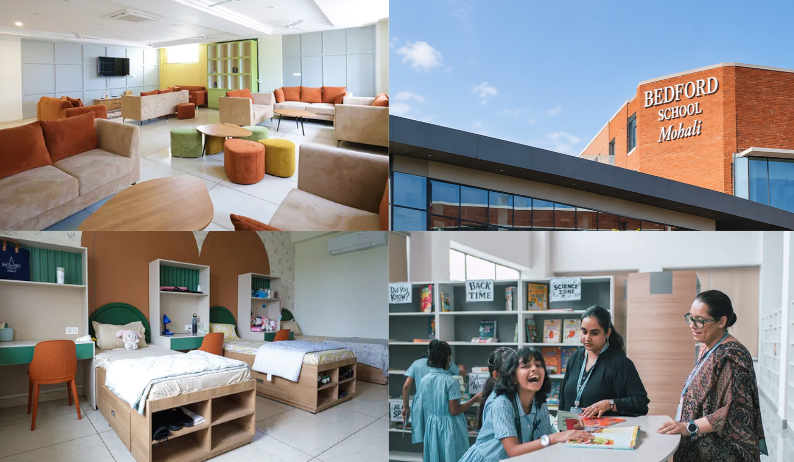
At Bedford School Mohali, the Cambridge International pathway is complemented by supervised evening preparation, creative and technological activities, leadership opportunities and pastoral care. Its boarding experience also includes educational visits and opportunities to engage with the wider world.
These experiences can help girls develop the curiosity, responsibility and confidence needed for future academic challenges.
Preparing for Oxford Begins Long Before Applications
The journey from campus to Oxford is not about collecting achievements or following a guaranteed admission formula.
It begins with strong academic foundations, independent thinking and sustained curiosity about a chosen subject.
Residential schooling can help develop these qualities when academic guidance is supported by meaningful enrichment and personal responsibility. Ultimately, the strongest preparation is an education that encourages girls to ask better questions, explore ideas deeply and take ownership of their learning.

Recent Comments